

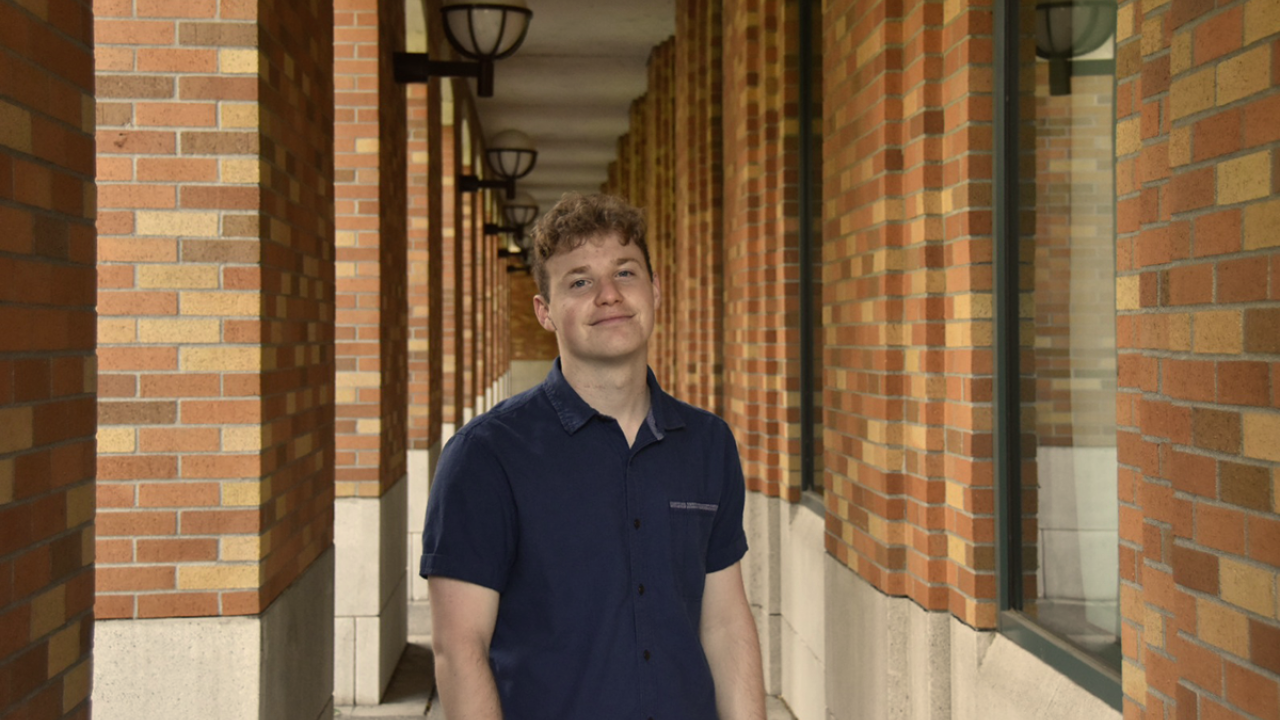
A Second Chance Becomes a New Beginning
How the UC Davis Health Professions Post-Baccalaureate Program combined academic preparation and personalized support to help Ryan Dulong earn 10 medical school acceptances.
Undergraduate: University of Washington, Seattle
Major: Molecular, Cellular and Developmental Biology, minor in Music
Track: Research
Future Health Profession: Physician
Health Profession School: Touro University California
Ryan Dulong discovered his passion for medicine during the COVID-19 pandemic.
“I was especially inspired by the tireless efforts displayed by physicians,” he said.
After earning his bachelor’s degree, Ryan wasn’t satisfied with his GPA and questioned whether he was prepared for the rigors of medical school. He decided a post-baccalaureate program would give him the opportunity to strengthen both his academic record and study skills.
“A structured environment was exactly what I needed,” he said.
Determined to push himself academically, he applied to the UC Davis Health Professions Post-Baccalaureate Program. Its academic-enhancing curriculum, summer learning experiences and personalized advising stood out.
“I wanted to see if I could succeed in a rigorous program similar to medical school while improving my ability to ask for help—something I failed to do in undergrad,” said Ryan. “The advisors and faculty at UC Davis were very supportive. This gave me the confidence to seek help whenever I was struggling and made me realize I had what it takes to succeed in medical school.”
Ryan received 10 medical school acceptances. Today, he is preparing for the next step in his journey toward becoming a physician at Touro University California.

What aspects of the program made the biggest difference for you?
Having easy access to approachable advisors was very helpful. I felt like I could always get help when I needed it.
In addition, the structure of the post-bac made me feel like I was back in undergrad. This time, though, I had a much greater focus on improving my study and academic skills.
How did the program prepare you for the medical school application process?
My academic advisors became my closest advisors during the medical school application process, and they provided everything from essay writing help to interview prep. They were always easily accessible and acted as a source of comfort during such a long and difficult process. Without my advisors, especially Doug, Bryelle and Jennie, I doubt I would have been nearly as successful as I was during my application cycle.
Can you share a resource that was especially helpful during your MCAT preparation?
One specific resource I found most helpful was all the virtual and in-person practice MCATs we had access to. These helped me build the stamina required to complete a seven-hour test like the MCAT.

Why did you choose the research track, and how did it prepare you for medical school?
The research track allowed me to develop critical thinking and scientific communication skills that are important for doctors to effectively treat patients. It also helped round out my application as research was something missing from my undergrad experience. I was even able to stay on as a research assistant after the program ended, giving me many opportunities to conduct and present my own research.
How did your cohort contribute to your success?
I had a lot of fun with my cohort. Everyone was just as focused and committed as I was without the competitiveness I experienced in undergrad around other pre-meds. It was easy to study with my peers and ask them for help, which empowered me to help teach them what I knew. I formed lifelong friendships with others on a similar career path, and I look forward to keeping in touch with them and sharing in our successes as the years go on.
What was your biggest challenge, and how did the program help you overcome it?
Ready to strengthen your medical school application?
Learn how the UC Davis Health Professions Post-Baccalaureate Program can help you build academic confidence, gain hands-on experience and prepare for the next step in your journey. Contact an enrollment coach to get started.
My biggest challenge was learning how to seek help when I alone didn’t feel like I could succeed. Before the post-bac, I thought needing help was a sign of personal weakness. Now, when I look back at my time in the program, I feel grateful that I was supported by advisors, faculty and peers who empowered me to ask questions and get support in a judgment-free environment.
I no longer see asking for help as a weakness. I see it as a sign of growth and an important tool to connect with others. I know that medical school will be even more academically and emotionally challenging than the post-bac, but at least now I feel confident in my ability to ask for help.
What would you say to someone considering the UC Davis Health Professions Post-Baccalaureate Program?
It’s an invaluable experience to regain academic confidence and work on study skills in a structured, supportive environment. The program provided exactly what I was missing to help me stand out as a medical school applicant.